Marketing9 min read
Marketers, you’re more prepared for AI than you think
Strategy, briefing, understanding audiences, evaluating creative work and refining ideas are skills we already practise every day.

Working with my fellow creative professionals, I’ve noticed more than a little trepidation, scepticism and fear when it comes to AI adoption. There’s curiosity about what it can do, but also a more personal concern: will AI take my job?
If the media is anything to go by, who could blame them? Anxious AI layoff talk is dominating headlines worldwide. Here in Australia, NAB, CBA and Westpac have all been announcing workforce reductions, with AI increasingly part of the conversation (Australian Broadcasting Corporation, 2026; Henderson, 2026).
There’s a disquieting tension in giving focus to something that could, at least in part, take over your job or change your career path.
Then there’s the technical language. Prompt engineering, agentic workflows, fine-tuning, neural networks. It can feel as though staying relevant means starting again in a wholly new discipline, while that discipline changes almost daily.
Even AI experts like Andrej Karpathy have admitted they’re struggling to keep up (Business Today, 2025).
So, if the experts are struggling, how on earth are the rest supposed to start?
During my MIT Applied Agentic AI for Organisational Transformation programme, the importance of retaining, educating and training skilled human workers with institutional knowledge was clear. Their experience is essential to designing effective AI-enabled processes, building trust and making implementations successful.
It also got me thinking.
Marketers already have strong foundational skills to be effective with AI, whether using the tools themselves or contributing to an AI integration team.
Strategy, briefing, understanding audiences, evaluating creative work and refining ideas are skills we already practise every day.
With only 12% of Australian businesses reporting AI use last year (Australian Bureau of Statistics, 2026) and demand for agentic AI skills in job ads rising +199.2% annually in September (Woods & Co Recruitment, n.d.), there’s an opportunity to start applying those skills now.
And with a little curiosity and experimentation, build on those skills rather than start from scratch.
Prompt engineering isn’t as alien as it sounds
Think about briefing a creative agency.
You know from experience that a quality brief produces better results.
You explain the commercial and brand objectives, who the work needs to reach, what that audience cares about and why. You define the scope, set rules for the direction, establish success criteria and share examples that make your expectations clear.
Then, when the response arrives, you assess it against the brief. If something misses the mark, you diagnose why and give clear, specific feedback.
That familiar cycle of briefing, review, feedback and iteration captures many prompt engineering core principles.
Prompt engineering sounds fancy, but it isn’t as scary as it sounds. It involves designing, testing and refining the instructions you give an AI model or tool so it reliably produces the output you want.
Both Anthropic and OpenAI emphasise clear instructions, relevant context, examples, constraints and iterative refinement as important foundations of effective prompting.
To me, the segue into prompt engineering feels like a natural extension of marketing practice.
Of course, there are a few speed bumps you’ll need to overcome
There’s a learning curve, which I think of as an AI–human communication barrier.
Different models and tools have their own strengths and limitations, much like individuals within your team. Image-generation prompts, for example, often need more explicit direction and visual references than text generation does.
And instructions that work beautifully with one AI model won’t necessarily produce the same results with another.
AI also doesn’t automatically have the industry or specialist knowledge that you and your agency bring to the work. Every assumption needs to be spelled out, almost as though you’re briefing someone entirely new to your business.
AI’s responses are also influenced by its training data. Without direction, it can fall back on familiar patterns and assumptions rather than the nuance your work requires.
Additional instructions, examples and supporting structures can help guide those results more reliably.
But that’s precisely where your experience becomes valuable. Through experimentation, you’ll learn how to adapt your prompts to different tools and hone your skills.
Even then (you’re the boss) there are some tasks that AI just shouldn’t be involved in that need a more human touch.
Yes, AI can improve productivity. Just remember you’re in charge.
A BCG field experiment published in Organization Science, involving tasks such as marketing concept ideation, segmentation and persuasive writing within the AI model’s capabilities (Dell’Acqua et al., 2026), found that AI-assisted consultants achieved:
- 12.2% more tasks
- 25.1% faster
- Over 40% higher-quality
Put simply, when used with intention and purpose alongside your expertise and judgement, AI can help you achieve more.
Think of that competitive research or ideation project you’ve been mothballing for weeks because more urgent work came along. Or perhaps you’re in a hiring freeze and missing a pair of helping hands.
AI can help tackle those arduous, time-consuming tasks, adding texture, depth, quality and speed to your work.
The catch? Don’t let AI do all the thinking.
Common pitfalls creep in when we trust AI’s work more than our own, or don’t define what we want effectively.
Research by Lee et al. (2025) found that greater confidence in AI was associated with less self-reported critical-thinking effort and poorer outcomes. Equally, confidence in one’s own abilities was associated with more critical thinking.
It’s a useful reminder that our expertise and judgement need to stay in control.
Your experience, knowledge and instincts should guide the work, just as they would when reviewing something produced by a junior team member.
Over-reliance on AI without human critique can cause anything from awkward errors to serious reputational harm. None more memorably than lawyer Steven A. Schwartz’s reliance on fabricated ChatGPT legal research in the infamous Mata v. Avianca case.
And we’ve all seen the abominable AI-generated marketing collateral flooding community pages: kitsch posters, chaotic message hierarchies and questionable design flair.
Without effective prompting involving an experienced designer or marketer, AI can be a blunt, ugly instrument.
As they say, you are what you eat. And AI results are only as good as the brief, context, direction and oversight you feed the tool.
Don’t underestimate the value of your strategic instincts, professional judgement and the processes you’ve honed over years of experience.
There’s a world of AI beyond writing
Did you know that writing is the leading work-related use case for ChatGPT, with much of that involving editing rather than generating something new (Chatterji et al., 2025)?
There’s a blizzard of incredible AI tools that can accelerate work across the product-development lifecycle and almost every corner of marketing and design, sans kitsch stars and tacky typefaces.
If you haven’t explored much beyond writing, here are a few no-code ideas to experiment with, either at work* or through personal projects:
Creative exploration and prototyping
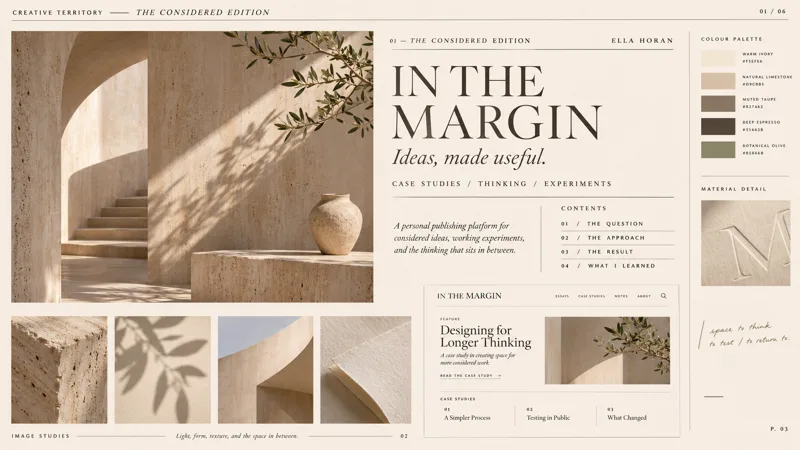
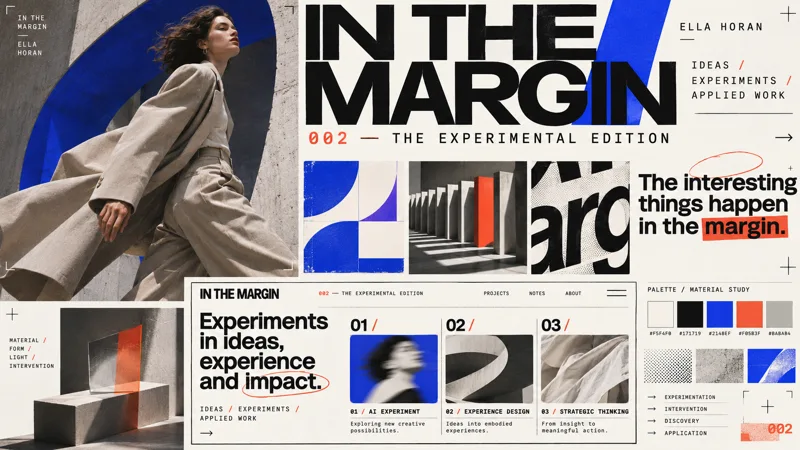
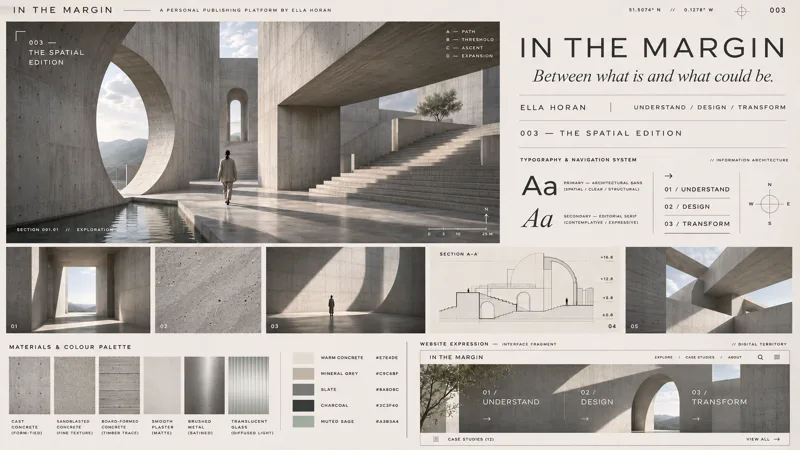
- Explore creative directions: ChatGPT image generation. Create moodboards, product mock-ups and visual concepts to accelerate ideation, explore directions and align stakeholders before investment. Preview an example here.
- Make ideas interactive: ChatGPT Sites. Turn proposals, dashboards or educational concepts into lightweight interactive experiences, just like this one.
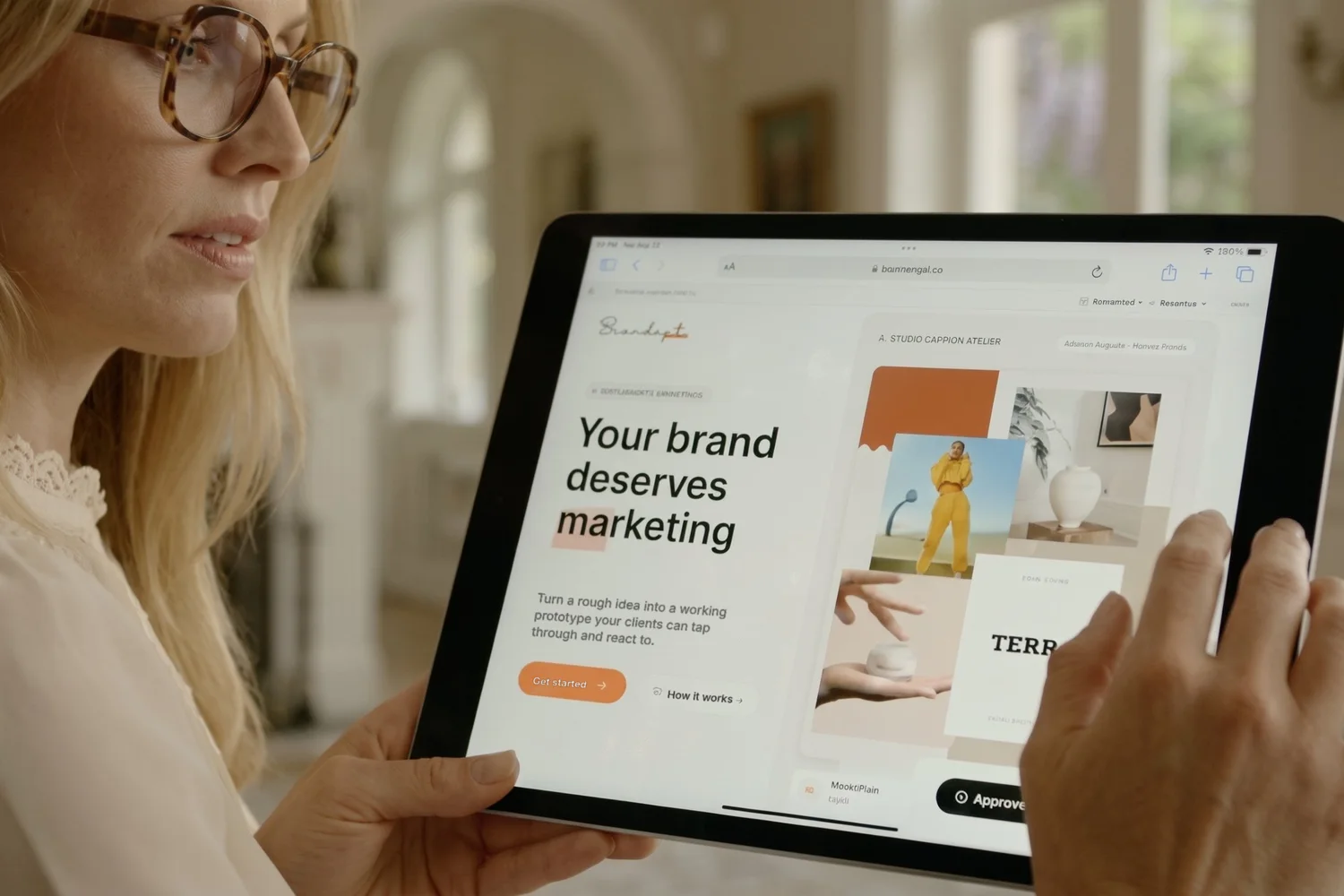
- Prototype websites and apps: Google Stitch and AI Studio. Turn prompts or sketches into interactive prototypes to explore designs, demonstrate concepts and refine ideas like this.
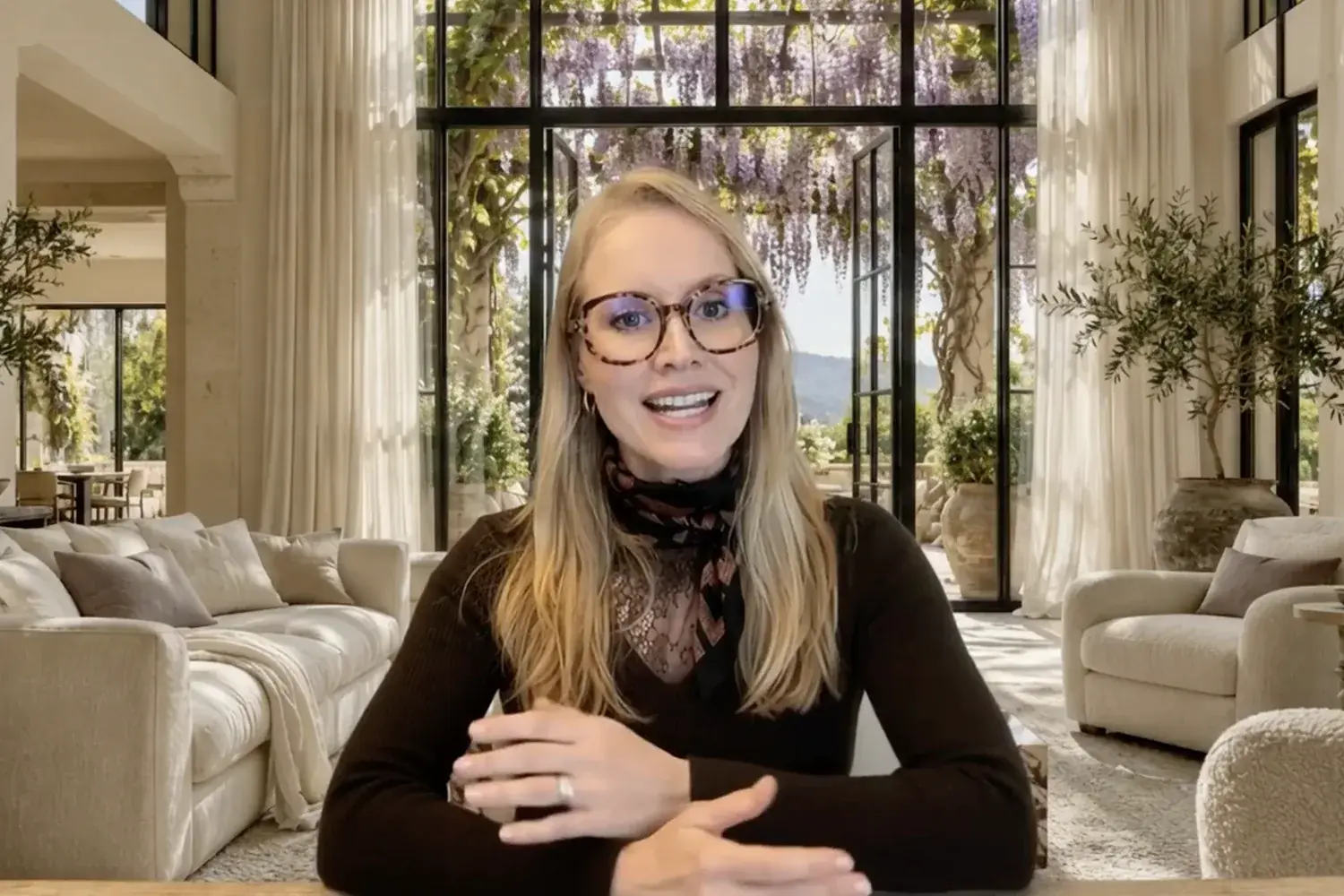
- Create AI-powered videos: Google Vids. Experiment with scripts, AI avatars and video production for social content, presentations, pitches, training and executive updates. Check out this snippet I made with my Personal Avatar.
Quality control, intelligence and research
- Proof artwork and documents: ChatGPT visual analysis. Analyse images and PDFs to spot errors, check brand consistency, transcribe notes and generate SEO descriptions or image tags, saving hours on deep manual proofing. For example, compare a large PDF catalogue against a technical specifications spreadsheet to flag possible errors, inconsistencies or duplications for your review.
- Run a weekly intelligence scan: Claude. Monitor competitors, trends, headlines and sentiment, synthesising complex research while spotting contradictions and knowledge gaps. For example, a weekly consumer-AI pulse scan across news, academic research, Reddit, social platforms and app stores.
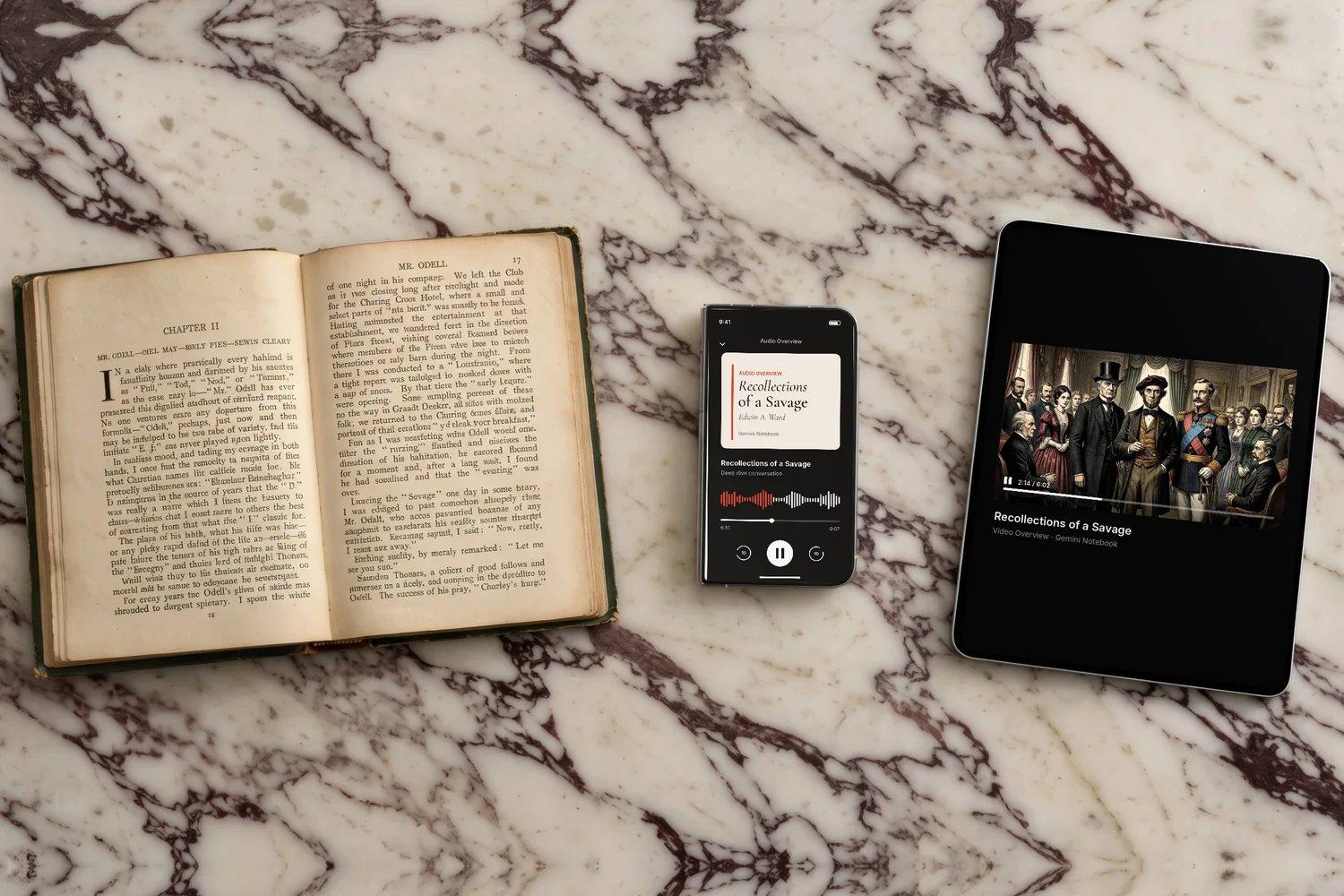
- Research and learn: Google’s Gemini Notebook (previously known as NotebookLM). Turn uploaded documents into source-grounded summaries, podcasts, study materials and reports. For example, I used ChatGPT to convert a PDF of a family heirloom book into text, then loaded a chapter into Gemini Notebook to create an audio discussion and explore its contents through chat. See the margin note.
These aren’t enterprise transformation projects. They’re accessible starting points to discover what AI can do, and where it might genuinely improve your work.
The more you explore, the more opportunities you’ll find to apply it to processes you already know well.
*One important caveat: check your organisation’s AI policy, approved tools, subscription terms and data protections before using business information with AI. Don’t enter confidential, customer or personal information into unapproved tools. Privacy obligations, including those under Australia’s Privacy Act 1988 where applicable, and licensing terms also need consideration. Personal accounts do not provide the security required to be compliant with regulatory and contractual obligations.
Start with something you’re a master of
Rather than attempting to apply AI to a task that’s completely new, choose something useful in an existing repeating process where you can judge the result and benefit.
- Brief properly. Give the AI clear objectives, relevant context, examples, constraints and what a good result should achieve.
- Review and refine. Assess the response as you would work from an agency partner. Explain what needs changing and review again.
- Keep your learnings. Record what worked and what didn’t, so you can keep improving your prompts and processes.
- Measure the benefit. Compare the total time and quality of the AI approach with your usual approach, including briefing, checking and corrections.
A good result might look like time saved, more ideas explored or a deeper discussion with the team.
You don’t need to become an AI engineer to get started. You need a willingness to experiment, evaluate and learn.
The bigger opportunity: redesigning how work gets done
There’s another skill worth developing alongside prompting: workflow and process design.
McKinsey’s 2026 research found that stronger AI impact is associated with redesigning workflows, not simply improving individual tasks (Tinkoff et al., 2026).
If you haven’t mapped and streamlined the existing workflows in your department or business, that’s an important next step in preparing for agentic AI.
Instead of asking how AI can complete one task faster, consider the entire process.
Look for opportunities in:
- Repeated work that consumes valuable human time.
- Messy handovers between teams, people or systems.
- Bottlenecks that delay progress.
- Useful work that never gets completed because other priorities take over.
Perhaps a concept direction stalls because it was never signed off, or a competitive review doesn’t get completed because nobody has the time.
Perhaps the HR manager is struggling to keep up with internal questions about policy documents no one has time to fully digest.
Decide what would be most valuable to simplify, where AI assistance could be helpful and where the human team must stay involved.
Developing workflow and process-design skills alongside your AI use will help you shape decisions about how work can, and should, transform.
And marketers, particularly those experienced in campaign management, product development and coordinating cross-functional teams, already have valuable experience to bring to that conversation.
Your experience is an advantage, use it
I don’t think any of us can dismiss the looming uncertainty surrounding AI and its implications for our careers.
But I also don’t believe marketers need to approach it as outsiders trying to catch up with an entirely technical profession or with too much gloom.
We already understand strategy, audiences, briefing, feedback, creative quality and the coordination of complex work. And there are countless genuinely exciting applications of AI that can improve enjoyment in that work.
Your experience, institutional knowledge and the processes you’ve honed over years of practice make you well placed to create the structures and support needed to get the right results from AI.
The opportunity is to start applying those skills now, develop a deeper understanding of the technology’s capabilities and limitations, and build your confidence in designing how humans and AI work together.
Combining AI’s capabilities with your process design, playbooks and judgement is where the real opportunity lies.
You may be much closer to becoming effective with AI than you think.
And while we’re at it, perhaps you can help spare the world from any more of those kitsch, generic AI-generated posters by sharing your learnings with others.
Are you using AI as part of your day-to-day marketing workflows, either with consumer tools like these or with integrated AI agents? What’s working well, and where are you still held back from achieving what you want to? Tell me.

Sources & side quests
- Anthropic. (n.d.). Prompting best practices. Claude Platform Docs.
- Australian Broadcasting Corporation. (2026, October 21). Is AI behind job cuts at NAB and the big banks? [Audio recording]. ABC News Top Stories.
- Australian Bureau of Statistics. (2026, June 25). Characteristics of Australian business, 2024–25.
- Banks, R. (2026, March 18). Introducing “vibe design” with Stitch. Google.
- Business Today. (2025, December 28). ‘Never felt this behind’: OpenAI co-founder admits AI is evolving so fast it’s ‘refactoring’ how developers work.
- Chatterji, A., Cunningham, T., Deming, D. J., Hitzig, Z., Ong, C., Shan, C. Y., & Wadman, K. (2025). How people use ChatGPT (Working Paper No. 34255). National Bureau of Economic Research.
- Dell’Acqua, F., McFowland, E., III, Mollick, E., Lifshitz, H., Kellogg, K. C., Rajendran, S., Krayer, L., Candelon, F., & Lakhani, K. R. (2026). Navigating the jagged technological frontier: Field experimental evidence of the effects of artificial intelligence on knowledge worker productivity and quality. Organization Science, 37(2), 403–423.
- Gastmann, J., & Bastos, M. (2025). Strategising with generative AI: Productivity gains in social media marketing. Journal of Marketing Communications. Advance online publication.
- Henderson, R. (2026, October 22). Westpac axes 140 more roles as Australia bank job cuts intensify. Bloomberg News.
- Lee, H.-P., Sarkar, A., Tankelevitch, L., Drosos, I., Rintel, S., Banks, R., & Wilson, N. (2025). The impact of generative AI on critical thinking: Self-reported reductions in cognitive effort and confidence effects from a survey of knowledge workers. In Proceedings of the 2025 CHI Conference on Human Factors in Computing Systems (Article 1121, pp. 1–22). Association for Computing Machinery.
- OpenAI. (n.d.-a). Prompt engineering. OpenAI API documentation.
- OpenAI. (n.d.-b). Sites. ChatGPT Learn.
- Tinkoff, D., Van der Veken, L., Chui, M., & Balakrishnan, T. (2026, August 25). The state of AI in 2026: On the road to ROI. McKinsey & Company.
- Woods & Co Recruitment. (n.d.). The future of recruitment in 2027: More candidates, new skills and a changing hiring market.